For large dental service organizations, the practice management platform decision often comes down to two enterprise-grade, cloud-native systems: Dentrix Ascend from Henry Schein One and Denticon from Planet DDS. Both are built for multi-location groups, both run in the cloud, and both are investing heavily in AI. This comparison breaks down how they differ where it matters for a DSO.
At a glance
| Dentrix Ascend | Denticon | |
|---|---|---|
| Vendor | Henry Schein One | Planet DDS |
| Architecture | Cloud-native | Cloud-native |
| Built for | Growing groups & enterprise | Enterprise DSOs from the start |
| Ecosystem | Deep Henry Schein integration | Open platform + DentalOS AI agents |
| Sweet spot | Groups on the Henry Schein stack | Large, centrally managed DSOs |
Architecture and scale
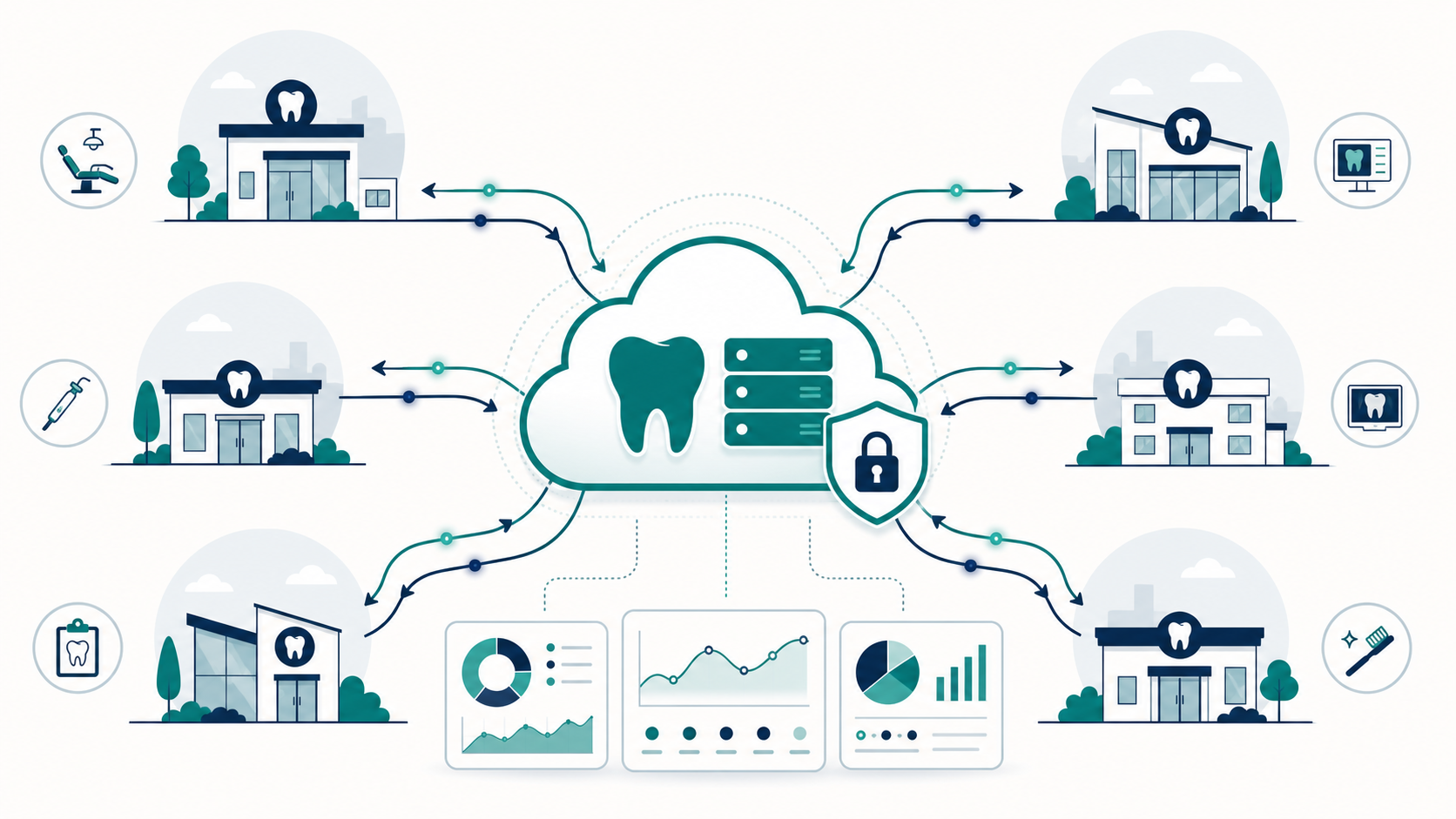
Both platforms are genuinely cloud-native, which is table stakes for a modern DSO — real-time data across locations, no on-premise servers, and centralized updates. Denticon was designed for enterprise dentistry from the beginning, and its single-database model spanning hundreds of locations is a frequent reason very large groups select it. Dentrix Ascend is the cloud successor to the massively deployed on-premise Dentrix, and it scales well for growing groups while offering a familiar workflow to teams migrating off legacy Dentrix.
Reporting and multi-location management
This is where enterprise platforms earn their keep. Both offer organization-wide dashboards with drill-down by location, provider, and procedure. Denticon has a long track record in centralized administration — standardizing fee schedules, permissions, and reporting across a large footprint. Dentrix Ascend’s reporting is strong and improving, and its tight coupling with Henry Schein’s broader portfolio (imaging, supply chain, revenue cycle) can simplify the stack for groups already invested there.
AI and automation
Planet DDS has moved aggressively into embedded automation with DentalOS AI agents that work directly inside the practice management workflow — handling routine scheduling and administrative tasks. Henry Schein One continues to expand AI and integration capabilities across the Dentrix Ascend ecosystem.
Just as important is what each platform lets third-party AI do. Both expose integrations for imaging AI (see Overjet vs. Pearl), analytics, and patient-communication tools. Front-office AI vendors — from Weave and NexHealth to AI-first receptionists like TrueLark and Arini, and operating-system platforms such as Viva AI — generally integrate well with both, though the depth of any given integration is worth confirming during evaluation.
Which should a DSO choose?
- Choose Dentrix Ascend if your group is standardized on the Henry Schein ecosystem, is migrating from legacy Dentrix, or values a single vendor relationship across PMS, imaging, and supply chain.
- Choose Denticon if you are a large, centrally managed DSO that prioritizes deep multi-location administration and wants embedded AI agents inside the PMS.
For broader context on the PMS landscape, see our guide to the best dental practice management software for DSOs and CareStack vs. Dentrix.
Frequently asked questions
Is Dentrix Ascend the same as Dentrix?
No. Dentrix is the legacy on-premise system; Dentrix Ascend is the cloud-native platform built for multi-location groups. They share a vendor (Henry Schein One) but are separate products.
Is Denticon good for large DSOs?
Yes. Denticon was designed for enterprise dentistry and is one of the most common platforms among large DSOs, largely because of its centralized, single-database administration across many locations.
Do both platforms support AI?
Yes. Denticon (via Planet DDS’s DentalOS) embeds AI agents in the workflow, and both platforms integrate with third-party AI for imaging, analytics, and patient communication.
DSO News covers technology and operations for dental service organizations. Vendor mentions are editorial and do not represent endorsements.